Introduction
What is JointJS?
JointJS is a proven JavaScript/TypeScript diagramming library for building complex, production-scale diagramming applications.
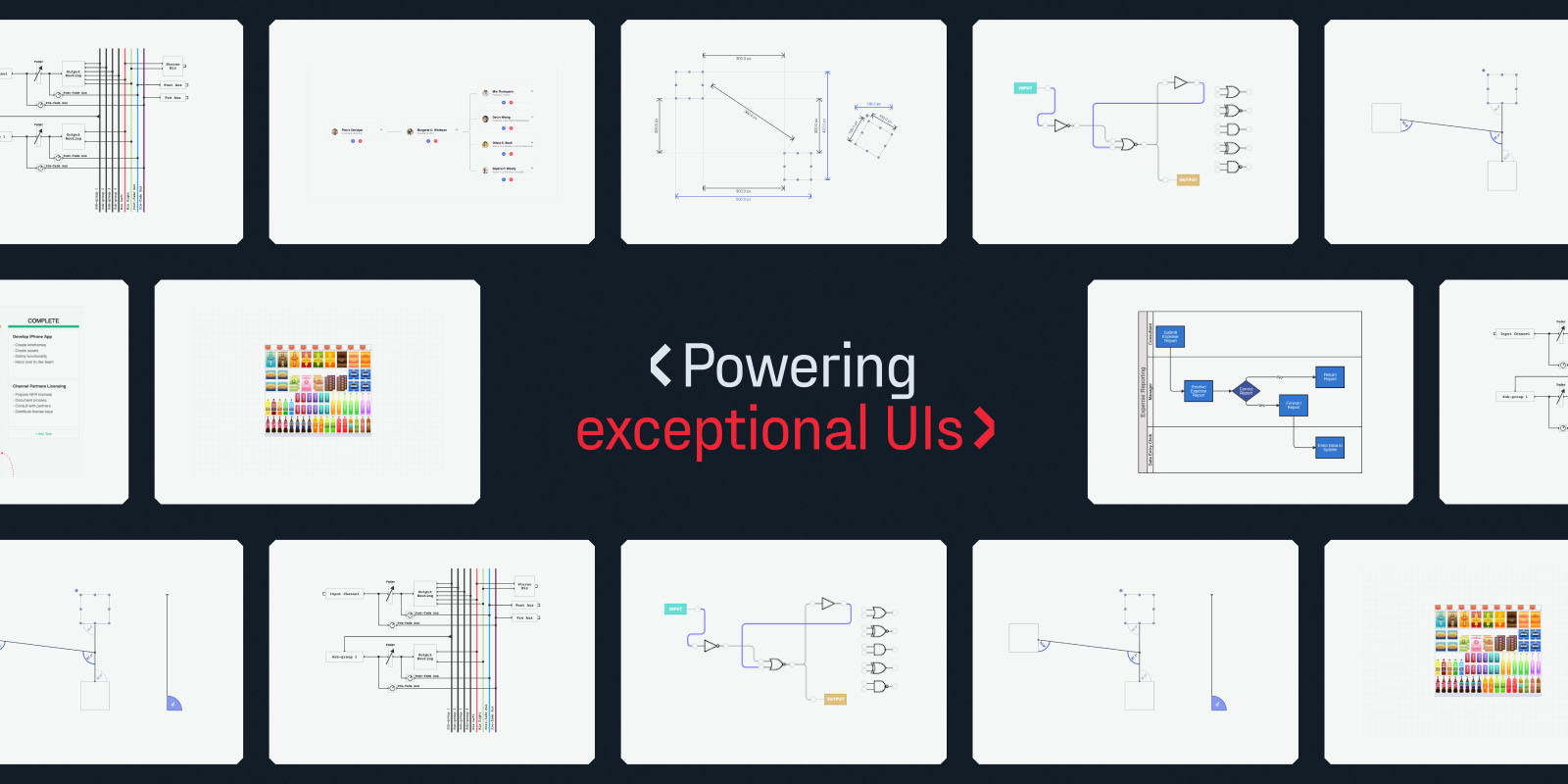
Teams use it to build AI workflow builders, flowchart and process editors, BPMN modelers, SCADA/HMI and monitoring dashboards, data modeling tools, energy network diagrams, electronic design tools, and org chart builders. JointJS is framework-agnostic, with first-class support for React.
What is the difference between JointJS and JointJS+?
JointJS is an open-source diagramming library that lets you create fully interactive diagramming tools for all modern browsers, relying only on JavaScript and SVG. It's framework-agnostic, with first-class support for React.
Learn more...
JointJS provides:
- a suite of tools for working with nodes and edges
- a package for calculations on SVG shapes and their interactions
- a package for dealing with SVG transformations and text
- native React components and hooks (JointJS for React)
JointJS+ is a commercial extension to JointJS that provides a number of pre-made plugins to extend the free tier's functionality.
Learn more...
JointJS+ includes everything from JointJS, and adds plugins for:
- ready-to-use UI components
- advanced control interactions
- automatic graph layout algorithms
- export/import functionality to a wide variety of formats
- printing from the browser and creating slideshow presentations from diagrams
- shapes for BPMN and VSM
- the full JointJS+ feature set in React, via JointJS+ for React
Feel free to refer to the full list of features of both and reach out to us for a free 30-day trial.
Explore JointJS
Building with AI
Using an AI coding agent? Connect it to the JointJS MCP server so it can search the official docs and demos while you build.
JointJS features
Looking for more detailed information? We have it:
API reference
Need to get to the nitty-gritty technical stuff? You will find it in our API reference, which includes: